


Sale
Lactose-Free Plain Whole Milk Kefir - 32 fl oz
Green Valley Creamery
$9.89
$8.89
Below are the available bulk discount rates for each individual item when you purchase a certain amount
- Buy 2 - 2 and get 2% off
- Buy 3 - 5 and get 4% off
- Buy 6 or above and get 8% off
(No reviews yet)

Write a Review
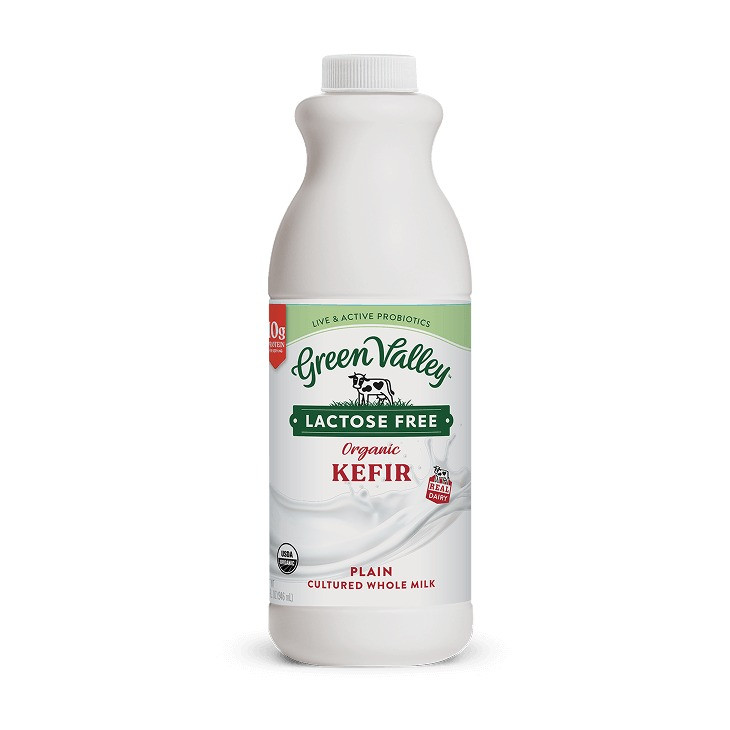
Green Valley Creamery
Lactose-Free Plain Whole Milk Kefir - 32 fl oz
Most lactose-free dairy skips fermentation entirely — it's just milk with the lactose filtered or broken down, no cultures involved. This kefir does both: organic whole milk gets dosed with lactase to break down the lactose, then cultured with eleven strains of live and active bacteria to become true kefir. Every single batch is lab-tested against Green Valley's own strict standard before it ships, so "lactose-free" here is a verified fact, not a hopeful label claim.
- Drink it straight, blend into smoothies, or swap it cup-for-cup for buttermilk in pancakes, dressings, and baked goods
- Eleven live culture strains — including S. thermophilus, L. acidophilus, and Bifidobacterium lactis — deliver billions of probiotics per serving, with every batch verified lactose-free
- Certified organic, gluten-free, and Kosher — built for anyone managing lactose intolerance without giving up real cultured dairy
This plain whole milk kefir starts with organic milk, then takes an extra step most lactose-free dairy doesn't bother with: adding lactase, the enzyme your body uses to digest milk sugar, so lactose breaks down into two easily digestible sugars before culturing even begins, resulting in a genuinely lactose-free kefir rather than just filtered milk.
Eleven live and active culture strains — S. thermophilus, L. delbrueckii subsp. bulgaricus, L. casei, L. acidophilus, Bifidobacterium lactis, L. rhamnosus, Lactococcus lactis subsp. cremoris, Lactococcus lactis subsp. lactis, Lactococcus lactis subsp. lactis biovar diacetylactis, Leuconostoc mesenteroides subsp. cremoris, and L. delbrueckii subsp. lactis — ferment the organic whole milk into a tangy, pourable probiotic dairy drink, delivering billions of probiotics in every serving.
Green Valley doesn't just formulate it lactose-free — every batch is tested to confirm it against their own strict internal standard before it leaves the facility.
Drink it straight from the glass, blend it into a morning smoothie, whisk it into salad dressing, or use it in place of buttermilk in pancakes and baked goods.
Certified organic, gluten-free, and Kosher, with no added sugar — just cultured organic milk. Keep refrigerated, shake well, and consume by the date on the cap.
Ingredients: Organic Pasteurized Whole Milk, Lactase Enzyme*, Live and Active Cultures, S. Thermophilus, L. Delbrueckii Subsp. Bulgaricus, L. Casei, L. Acidophilus, Bifidobacterium Lactis, L. Rhamnosus, Lactococcus Lactis Subsp. Cremoris, Lactococcus Lactis Subsp. Lactis, Lactococcus Lactis Subsp. Lactis Biovar Diacetylactis, Leuconostoc Mesenteroides Subsp. Cremoris, and L. Delbrueckii Subsp. Lactis.
Common Questions
How does this compare nutritionally to regular whole milk kefir or plain yogurt?
A one-cup (8 fl oz) serving of this kefir runs about 160 calories, 8 grams of fat, 8 grams of protein, and 11 grams of carbohydrate, which is in the same range as conventional whole milk kefir. The difference isn't the macros, it's how the lactose is handled: in regular kefir, lactose is only partially broken down by fermentation, leaving enough behind to bother most lactose-intolerant people. Here, lactase enzyme is added before culturing even starts, so nearly all of that lactose is pre-split into glucose and galactose. The result is a product with the same calorie and protein profile as standard kefir but without the digestive fallout for lactose-sensitive drinkers.
What does the lactase enzyme actually do, and why add it before fermentation instead of relying on the culture alone?
Lactase is the same enzyme your small intestine produces to split lactose (milk sugar) into glucose and galactose, two simple sugars your body absorbs directly without needing lactase of your own. Fermentation alone, using bacteria like L. bulgaricus and S. thermophilus, only consumes a portion of the lactose as the cultures feed and multiply, which is why plenty of 'cultured' dairy still causes symptoms in lactose-intolerant people. By dosing lactase into the milk before culturing begins, this process breaks down the lactose directly rather than counting on incomplete bacterial consumption. That's the mechanical reason this kefir can be verified lactose-free rather than just 'lower lactose.'
Does this fit a keto, paleo, or carnivore diet?
At 11 grams of carbohydrate per cup, this kefir is moderate for strict keto, so most keto eaters treat it as a portioned add-in (a splash in coffee or a half-cup smoothie base) rather than drinking a full glass daily. For paleo, plain fermented full-fat dairy from pasture-raised, organic sources is commonly accepted since the culturing process and lactose removal address the two objections paleo followers usually have with milk. Carnivore protocols vary, but the stricter versions exclude dairy entirely, while more flexible carnivore or 'carnivore-ish' approaches often permit plain, unsweetened fermented dairy like this since it has no added sugar and no grain-based ingredients. Check the specific version of the protocol you're following, since dairy tolerance is one of the most debated points across these diets.
What can I use this kefir for besides drinking it plain?
It works as a one-to-one buttermilk substitute in pancakes, waffles, biscuits, and cornbread, and its acidity reacts with baking soda the same way buttermilk does, so no recipe adjustment is needed. Whisk it into vinaigrettes or ranch-style dressings in place of buttermilk or sour cream for a tangier, thinner result. Blended into smoothies, it adds protein and a tart edge without added sugar. It also works as a marinade base for chicken or pork, since the lactic acid gently tenderizes the meat over a few hours in the refrigerator, similar to how yogurt marinades function in many cuisines.
How is the lactose-free claim actually verified, not just assumed?
Green Valley states that every batch is lab-tested against their own internal lactose standard before it ships, rather than relying solely on the formulation (adding lactase) to make the claim. This matters because the FDA doesn't have a formal regulatory definition for 'lactose-free' the way it does for gluten-free (which requires under 20 ppm), so companies set their own thresholds, and testing per batch is what separates a verified claim from a marketing one. On the certification side, Certified Organic means the milk comes from cows without synthetic pesticides, hormones, or antibiotics, and the Kosher certification confirms the product and its production process were reviewed by a certifying agency for compliance with kosher dietary law. Look for the organic certifier's seal and lot-specific information on the label if you want to trace a specific batch back to its certification records.
How many probiotic strains are in this kefir and what do they contribute?
There are ten distinct live culture strains listed, including S. thermophilus and L. bulgaricus (the classic yogurt cultures that drive initial fermentation and tang), L. acidophilus and Bifidobacterium lactis (commonly studied for gut and digestive support), and L. rhamnosus and L. casei (strains frequently included for their survivability through stomach acid). The remaining Lactococcus and Leuconostoc strains contribute to kefir's characteristic thinner texture and slight effervescence compared to yogurt, since they produce small amounts of carbon dioxide and diacetyl (a flavor compound) during fermentation. Having ten strains rather than the two or three found in basic yogurt is what defines kefir's broader microbial diversity, which is the main nutritional distinction between kefir and yogurt beyond texture.
Is there any added sugar in this, and why does it still taste tangy rather than sweet?
No, the ingredient list contains only organic whole milk, lactase enzyme, and live cultures, with no added sweeteners of any kind. The tang comes from lactic acid produced by the bacterial cultures as they ferment the milk, not from sugar content, and the lactase-treated lactose converts into glucose and galactose rather than adding sweetness, since those sugars are present in roughly the same concentration as the original lactose. If you want it sweetened, blending in fruit or a small amount of honey after opening is the straightforward way to adjust it, since the base product is formulated to be plain.
Eleven live and active culture strains — S. thermophilus, L. delbrueckii subsp. bulgaricus, L. casei, L. acidophilus, Bifidobacterium lactis, L. rhamnosus, Lactococcus lactis subsp. cremoris, Lactococcus lactis subsp. lactis, Lactococcus lactis subsp. lactis biovar diacetylactis, Leuconostoc mesenteroides subsp. cremoris, and L. delbrueckii subsp. lactis — ferment the organic whole milk into a tangy, pourable probiotic dairy drink, delivering billions of probiotics in every serving.
Green Valley doesn't just formulate it lactose-free — every batch is tested to confirm it against their own strict internal standard before it leaves the facility.
Drink it straight from the glass, blend it into a morning smoothie, whisk it into salad dressing, or use it in place of buttermilk in pancakes and baked goods.
Certified organic, gluten-free, and Kosher, with no added sugar — just cultured organic milk. Keep refrigerated, shake well, and consume by the date on the cap.
Ingredients: Organic Pasteurized Whole Milk, Lactase Enzyme*, Live and Active Cultures, S. Thermophilus, L. Delbrueckii Subsp. Bulgaricus, L. Casei, L. Acidophilus, Bifidobacterium Lactis, L. Rhamnosus, Lactococcus Lactis Subsp. Cremoris, Lactococcus Lactis Subsp. Lactis, Lactococcus Lactis Subsp. Lactis Biovar Diacetylactis, Leuconostoc Mesenteroides Subsp. Cremoris, and L. Delbrueckii Subsp. Lactis.
Common Questions
How does this compare nutritionally to regular whole milk kefir or plain yogurt?
A one-cup (8 fl oz) serving of this kefir runs about 160 calories, 8 grams of fat, 8 grams of protein, and 11 grams of carbohydrate, which is in the same range as conventional whole milk kefir. The difference isn't the macros, it's how the lactose is handled: in regular kefir, lactose is only partially broken down by fermentation, leaving enough behind to bother most lactose-intolerant people. Here, lactase enzyme is added before culturing even starts, so nearly all of that lactose is pre-split into glucose and galactose. The result is a product with the same calorie and protein profile as standard kefir but without the digestive fallout for lactose-sensitive drinkers.
What does the lactase enzyme actually do, and why add it before fermentation instead of relying on the culture alone?
Lactase is the same enzyme your small intestine produces to split lactose (milk sugar) into glucose and galactose, two simple sugars your body absorbs directly without needing lactase of your own. Fermentation alone, using bacteria like L. bulgaricus and S. thermophilus, only consumes a portion of the lactose as the cultures feed and multiply, which is why plenty of 'cultured' dairy still causes symptoms in lactose-intolerant people. By dosing lactase into the milk before culturing begins, this process breaks down the lactose directly rather than counting on incomplete bacterial consumption. That's the mechanical reason this kefir can be verified lactose-free rather than just 'lower lactose.'
Does this fit a keto, paleo, or carnivore diet?
At 11 grams of carbohydrate per cup, this kefir is moderate for strict keto, so most keto eaters treat it as a portioned add-in (a splash in coffee or a half-cup smoothie base) rather than drinking a full glass daily. For paleo, plain fermented full-fat dairy from pasture-raised, organic sources is commonly accepted since the culturing process and lactose removal address the two objections paleo followers usually have with milk. Carnivore protocols vary, but the stricter versions exclude dairy entirely, while more flexible carnivore or 'carnivore-ish' approaches often permit plain, unsweetened fermented dairy like this since it has no added sugar and no grain-based ingredients. Check the specific version of the protocol you're following, since dairy tolerance is one of the most debated points across these diets.
What can I use this kefir for besides drinking it plain?
It works as a one-to-one buttermilk substitute in pancakes, waffles, biscuits, and cornbread, and its acidity reacts with baking soda the same way buttermilk does, so no recipe adjustment is needed. Whisk it into vinaigrettes or ranch-style dressings in place of buttermilk or sour cream for a tangier, thinner result. Blended into smoothies, it adds protein and a tart edge without added sugar. It also works as a marinade base for chicken or pork, since the lactic acid gently tenderizes the meat over a few hours in the refrigerator, similar to how yogurt marinades function in many cuisines.
How is the lactose-free claim actually verified, not just assumed?
Green Valley states that every batch is lab-tested against their own internal lactose standard before it ships, rather than relying solely on the formulation (adding lactase) to make the claim. This matters because the FDA doesn't have a formal regulatory definition for 'lactose-free' the way it does for gluten-free (which requires under 20 ppm), so companies set their own thresholds, and testing per batch is what separates a verified claim from a marketing one. On the certification side, Certified Organic means the milk comes from cows without synthetic pesticides, hormones, or antibiotics, and the Kosher certification confirms the product and its production process were reviewed by a certifying agency for compliance with kosher dietary law. Look for the organic certifier's seal and lot-specific information on the label if you want to trace a specific batch back to its certification records.
How many probiotic strains are in this kefir and what do they contribute?
There are ten distinct live culture strains listed, including S. thermophilus and L. bulgaricus (the classic yogurt cultures that drive initial fermentation and tang), L. acidophilus and Bifidobacterium lactis (commonly studied for gut and digestive support), and L. rhamnosus and L. casei (strains frequently included for their survivability through stomach acid). The remaining Lactococcus and Leuconostoc strains contribute to kefir's characteristic thinner texture and slight effervescence compared to yogurt, since they produce small amounts of carbon dioxide and diacetyl (a flavor compound) during fermentation. Having ten strains rather than the two or three found in basic yogurt is what defines kefir's broader microbial diversity, which is the main nutritional distinction between kefir and yogurt beyond texture.
Is there any added sugar in this, and why does it still taste tangy rather than sweet?
No, the ingredient list contains only organic whole milk, lactase enzyme, and live cultures, with no added sweeteners of any kind. The tang comes from lactic acid produced by the bacterial cultures as they ferment the milk, not from sugar content, and the lactase-treated lactose converts into glucose and galactose rather than adding sweetness, since those sugars are present in roughly the same concentration as the original lactose. If you want it sweetened, blending in fruit or a small amount of honey after opening is the straightforward way to adjust it, since the base product is formulated to be plain.
- __Storage_Location:
- Refrigerated
- __Volume:
- 400
- __Owner:
- TCFarm
- __badge:
- Organic