


All-Purpose Seasoning Salt - 4 oz
Pork King Good
$7.99
Below are the available bulk discount rates for each individual item when you purchase a certain amount
- Buy 2 or above and get 6% off
(No reviews yet)

Write a Review
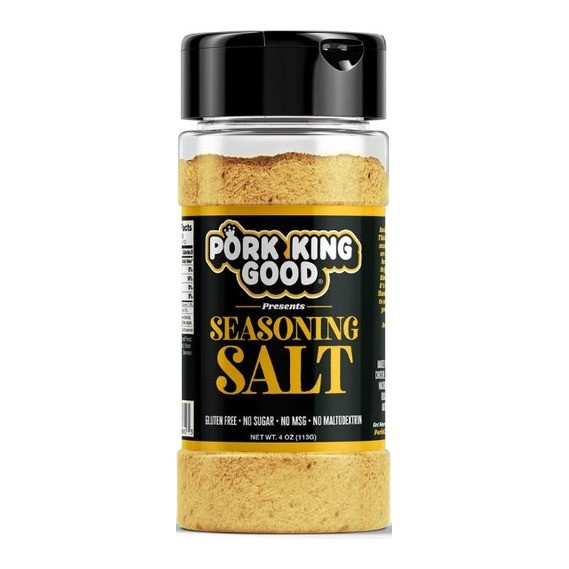
Pork King Good
All-Purpose Seasoning Salt - 4 oz
This is the exact eight-ingredient blend Pork King Good shakes onto its best-selling Original Pork Rind Crumbs — bottled on its own so it can go everywhere else in your kitchen. It comes from the only woman-owned pork rind manufacturer in the country, built inside the 74-year-old pork rind facility the brand bought outright in 2022, and it skips the dextrose and anti-caking fillers that pad most shaker-salt blends in favor of real paprika, mustard, onion, and garlic.
- Shakes onto eggs, popcorn, roasted potatoes, chicken, steak, pork, fish, mashed cauliflower, roasted vegetables, or avocado — anywhere a savory blend belongs.
- No dextrose, sugar, or anti-caking agents — just eight recognizable ingredients led by salt, autolyzed yeast, and paprika.
- Keto-friendly, paleo-compliant, and gluten-free, crafted by a woman-owned Wisconsin manufacturer carrying generations of recipe know-how.
Pork King Good started as a scrappy Milwaukee snack brand and grew into the only woman-owned pork rind manufacturer in the country when it bought out its 74-year-old supplier, The Porkie Company of Wisconsin, in 2022. This all-purpose seasoning salt is the same blend the team uses on its best-selling Original Pork Rind Crumbs — bottled separately so it can go to work everywhere else.
Each shaker holds a straightforward eight-ingredient blend: salt, autolyzed yeast, spices, paprika, mustard, onion powder, garlic powder, and oleoresin of paprika for color. No dextrose, no MSG, no anti-caking agents — just the savory backbone Pork King Good relies on for its flagship snack.
Shake it over scrambled eggs, popcorn, roasted or mashed potatoes, grilled chicken, steak, pork chops, fish, mashed cauliflower, roasted vegetables, or avocado slices — anywhere a savory finishing salt belongs.
Keto-friendly, paleo-compliant, and gluten-free seasoning salt by ingredient design, this blend stores at room temperature in your spice cabinet — no refrigeration needed.
Ingredients: Salt, Autolyzed Yeast, Spices, Paprika, Mustard, Onion Powder, Garlic Powder, and Oleoresin of Paprika.
Common Questions
How does this compare to a typical grocery store seasoning salt?
Most seasoning salts on grocery shelves list dextrose (added sugar) and silicon dioxide or calcium silicate as anti-caking agents among the first five ingredients, and many use monosodium glutamate as a flavor enhancer. This blend has eight ingredients total: salt, autolyzed yeast, spices, paprika, mustard, onion powder, garlic powder, and oleoresin of paprika for color. There's no added sugar and no isolated MSG, so the carb count per serving stays at zero grams instead of the 1-2 grams that sneak in from dextrose in conventional blends. The sodium content is comparable to other seasoning salts since salt is still the first ingredient, so it's not a low-sodium product, just a cleaner-label one.
What does autolyzed yeast do in this seasoning, and is it the same as MSG?
Autolyzed yeast is yeast that's been broken down by its own enzymes, which releases free glutamate naturally, similar to what happens when parmesan cheese or aged tomatoes develop savory depth. That free glutamate binds to the same umami taste receptors on the tongue as isolated MSG does, which is why this ingredient delivers a comparable savory boost without being a synthetic, standalone additive. Oleoresin of paprika works differently: it's a concentrated, oil-based extract of paprika used purely for its red-orange color, not flavor, so the seasoning looks consistent shaker to shaker without synthetic dyes like Red 40 or Yellow 6.
Does this fit keto, paleo, and carnivore diets?
Yes to all three. There are zero grams of net carbs per serving since none of the eight ingredients contain sugar, starch, or grain-derived fillers, which makes it compatible with keto macros that typically cap net carbs at 20-50 grams a day. For paleo, every ingredient traces back to a whole food source (yeast, dried spices, root vegetables like onion and garlic) with nothing synthetic or grain-based, meeting the diet's core exclusion criteria. Carnivore followers who allow spices and salt as flavor enhancers rather than macronutrient sources use it the same way, since it adds zero protein, fat, or carbs to a plate of meat, eggs, or fish.
What dishes work best with this seasoning, and do I need to adjust cooking times?
It's built to replace a dedicated steak seasoning or all-purpose rub, so it works straight onto steak, pork chops, grilled chicken, or fish before searing or grilling with no changes to cook time or temperature. For eggs and popcorn, add it after cooking rather than during, since the paprika and mustard notes come through more clearly on a finished surface than when scrambled into raw eggs. On roasted vegetables, mashed potatoes, or mashed cauliflower, toss it in during the last few minutes of cooking or right before serving to keep the color and aroma from fading under prolonged heat. It also holds up on cold applications like avocado slices with no adjustment needed.
What do the keto, paleo, and gluten-free certifications actually verify?
These labels indicate the finished product and its ingredient list have been reviewed against defined exclusion criteria: gluten-free means no wheat, barley, rye, or cross-contaminated derivatives; keto and low-carb certification means net carbs per serving fall under the threshold set by the certifying body, typically 1 gram or less; paleo certification confirms no grains, legumes, dairy, or refined sugar. You can verify ingredient sourcing yourself by checking the eight-item list on the label against these standards, since there's no proprietary blend or undisclosed 'natural flavors' hiding anything. The no-artificial-ingredients claim is similarly checkable line by line, since every ingredient is named rather than grouped under a vague catch-all term.
What makes Pork King Good different from other seasoning brands?
Pork King Good is the only woman-owned pork rind manufacturer in the country, a position it took on in 2022 when it acquired its longtime supplier, the 74-year-old Porkie Company of Wisconsin, rather than staying a smaller brand that outsources production. This seasoning salt isn't a separate product line dreamed up for retail; it's the exact blend the company uses internally on its best-selling Original Pork Rind Crumbs, bottled on its own so customers can use it beyond that one snack. That means the formula has already been tested at production scale for consistency and flavor balance rather than being a one-off recipe scaled up for bottling.
Each shaker holds a straightforward eight-ingredient blend: salt, autolyzed yeast, spices, paprika, mustard, onion powder, garlic powder, and oleoresin of paprika for color. No dextrose, no MSG, no anti-caking agents — just the savory backbone Pork King Good relies on for its flagship snack.
Shake it over scrambled eggs, popcorn, roasted or mashed potatoes, grilled chicken, steak, pork chops, fish, mashed cauliflower, roasted vegetables, or avocado slices — anywhere a savory finishing salt belongs.
Keto-friendly, paleo-compliant, and gluten-free seasoning salt by ingredient design, this blend stores at room temperature in your spice cabinet — no refrigeration needed.
Ingredients: Salt, Autolyzed Yeast, Spices, Paprika, Mustard, Onion Powder, Garlic Powder, and Oleoresin of Paprika.
Common Questions
How does this compare to a typical grocery store seasoning salt?
Most seasoning salts on grocery shelves list dextrose (added sugar) and silicon dioxide or calcium silicate as anti-caking agents among the first five ingredients, and many use monosodium glutamate as a flavor enhancer. This blend has eight ingredients total: salt, autolyzed yeast, spices, paprika, mustard, onion powder, garlic powder, and oleoresin of paprika for color. There's no added sugar and no isolated MSG, so the carb count per serving stays at zero grams instead of the 1-2 grams that sneak in from dextrose in conventional blends. The sodium content is comparable to other seasoning salts since salt is still the first ingredient, so it's not a low-sodium product, just a cleaner-label one.
What does autolyzed yeast do in this seasoning, and is it the same as MSG?
Autolyzed yeast is yeast that's been broken down by its own enzymes, which releases free glutamate naturally, similar to what happens when parmesan cheese or aged tomatoes develop savory depth. That free glutamate binds to the same umami taste receptors on the tongue as isolated MSG does, which is why this ingredient delivers a comparable savory boost without being a synthetic, standalone additive. Oleoresin of paprika works differently: it's a concentrated, oil-based extract of paprika used purely for its red-orange color, not flavor, so the seasoning looks consistent shaker to shaker without synthetic dyes like Red 40 or Yellow 6.
Does this fit keto, paleo, and carnivore diets?
Yes to all three. There are zero grams of net carbs per serving since none of the eight ingredients contain sugar, starch, or grain-derived fillers, which makes it compatible with keto macros that typically cap net carbs at 20-50 grams a day. For paleo, every ingredient traces back to a whole food source (yeast, dried spices, root vegetables like onion and garlic) with nothing synthetic or grain-based, meeting the diet's core exclusion criteria. Carnivore followers who allow spices and salt as flavor enhancers rather than macronutrient sources use it the same way, since it adds zero protein, fat, or carbs to a plate of meat, eggs, or fish.
What dishes work best with this seasoning, and do I need to adjust cooking times?
It's built to replace a dedicated steak seasoning or all-purpose rub, so it works straight onto steak, pork chops, grilled chicken, or fish before searing or grilling with no changes to cook time or temperature. For eggs and popcorn, add it after cooking rather than during, since the paprika and mustard notes come through more clearly on a finished surface than when scrambled into raw eggs. On roasted vegetables, mashed potatoes, or mashed cauliflower, toss it in during the last few minutes of cooking or right before serving to keep the color and aroma from fading under prolonged heat. It also holds up on cold applications like avocado slices with no adjustment needed.
What do the keto, paleo, and gluten-free certifications actually verify?
These labels indicate the finished product and its ingredient list have been reviewed against defined exclusion criteria: gluten-free means no wheat, barley, rye, or cross-contaminated derivatives; keto and low-carb certification means net carbs per serving fall under the threshold set by the certifying body, typically 1 gram or less; paleo certification confirms no grains, legumes, dairy, or refined sugar. You can verify ingredient sourcing yourself by checking the eight-item list on the label against these standards, since there's no proprietary blend or undisclosed 'natural flavors' hiding anything. The no-artificial-ingredients claim is similarly checkable line by line, since every ingredient is named rather than grouped under a vague catch-all term.
What makes Pork King Good different from other seasoning brands?
Pork King Good is the only woman-owned pork rind manufacturer in the country, a position it took on in 2022 when it acquired its longtime supplier, the 74-year-old Porkie Company of Wisconsin, rather than staying a smaller brand that outsources production. This seasoning salt isn't a separate product line dreamed up for retail; it's the exact blend the company uses internally on its best-selling Original Pork Rind Crumbs, bottled on its own so customers can use it beyond that one snack. That means the formula has already been tested at production scale for consistency and flavor balance rather than being a one-off recipe scaled up for bottling.
- __Storage_Location:
- Dry
- __Volume:
- 400
- __Owner:
- Pork King Good
- __badge:
- Keto