
Bison Tallow Cubes - 16 oz
Northstar BisonBelow are the available bulk discount rates for each individual item when you purchase a certain amount
- Buy 4 - 7 and get 6% off
- Buy 8 or above and get 12% off
Write a Review
Northstar Bison
Bison Tallow Cubes - 16 oz
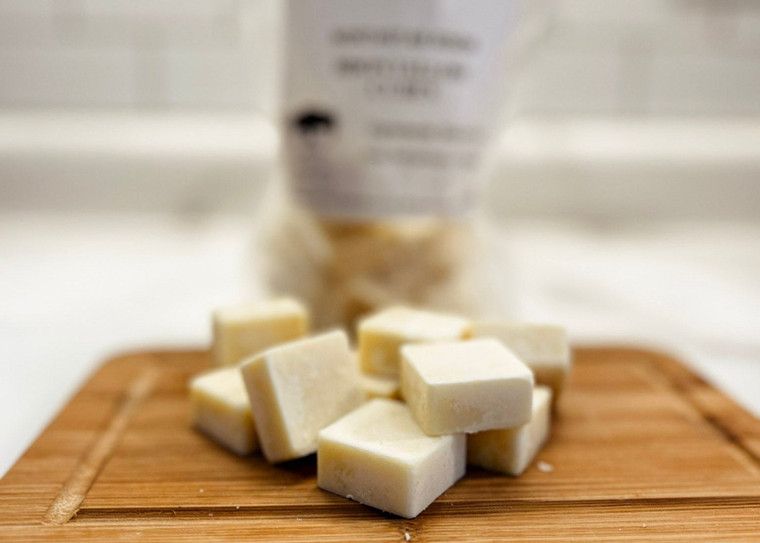
72 hours. Slow rendered. Finely filtered. Rapidly cooled.That's what it takes to render bison tallow this clean. Northstar's Bison Tallow Cubes are made from 100% grass-fed and finished, regeneratively raised Northern Plains bison, slow-rendered into individually portioned ~1 oz cubes, packaged in a 16 oz resealable bag so you pull exactly what you need and zip the rest back in the freezer. No scooping. No mess. No seed oils, no fillers, no additives. Hand delivered to your door by local drivers.
- Drop a cube directly from the freezer into a hot pan — use it for searing, roasting, or sautéing anywhere you'd reach for butter or oil
- Rendered from 100% grass-fed and finished Northern Plains bison fat — slow-rendered 72 hours in our jacketed steam kettles, finely filtered, free of seed oils, fillers, and additives
- Fits keto, paleo, carnivore, and gluten-free diets; corn-free, soy-free, and non-GMO
Rendered from the fat of 100% grass-fed and finished, regeneratively raised bison on the Northern Plains, then slow-rendered for 72 hours in jacketed steam kettles, finely filtered, bottled hot, and rapidly cooled. The result is an ultra-pure, smooth tallow with a mild, neutral profile that holds up to high heat without breaking down, portioned into individually sized ~1 oz cubes and packaged in a 16 oz resealable bag so you use exactly what you need and freeze the rest.
Walk the cooking fat aisle at any grocery store and you'll find commodity beef tallow rendered from grain-finished animals, hydrogenated shortenings, and seed oil blends — industrially processed, with no transparency into sourcing or raising method. This is the opposite of that. Single-ingredient bison tallow from 100% grass-fed and finished Northern Plains animals, raised on open pasture using regenerative land practices, slow-rendered with no additives, no fillers, and no seed oils. Grass-fed and finished fat carries a different nutrient composition than grain-finished fat, and bison tallow rendered at this processing standard is rarely available outside of direct-to-consumer specialty brands.
To use: unzip the resealable bag, remove one cube directly from the freezer, toss it into a hot pan, reseal, and return the bag to the freezer. Each cube is approximately 1 oz — a ready-to-go single serving with zero measuring, zero scooping, and zero melted-fat mess. Best used for searing, roasting, sautéing, or adding nutrient-dense fat and depth to any meal. This approach also honors the whole animal, using the fat that would otherwise go to waste is exactly how our ancestors cooked.
Customers who've made the switch aren't going back. The cube format draws consistent praise for eliminating the friction that stops most people from cooking with tallow — no jar to dig into, no guessing on portions, no cleanup. The flavor does the rest.
- "These bison tallow cubes are amazing and so easy to use, like throwing a pad of butter in the pan to melt down!" — Sarah M., verified buyer
- "It tastes so good it's ridiculous." — James T., verified buyer
- "Makes my life easier. Plus it tastes so good it's ridiculous. Thanks for making this available!" — verified buyer
Fits keto, paleo, carnivore, and gluten-free diets — pure rendered animal fat with zero carbohydrates, no seed oils, and no plant-derived additives makes this a natural staple across all three protocols. Corn-free, soy-free, and non-GMO. Sourced exclusively from bison raised on the open pastures of the Northern Plains, where the animals graze on native grasses from birth through finishing. Store in the freezer (freezer life: 24 months); alternatively, store in a cool, dark place for 3–6 months or refrigerate for 5–7 days. Thaw one cube as needed — 24 hours in the refrigerator, or simply drop it frozen into the pan.
The tallow cubes make cooking with grass-fed bison fat effortless — customers love the convenience and the flavor payoff.
- "These bison tallow cubes are amazing and so easy to use, like throwing a pad of butter in the pan to melt down! Delicious and makes my life easier. Plus it tastes so good it's ridiculous." — Leslie, Verified Buyer
Hand delivered to your door by local drivers.
Ingredients: 100% grass-fed and finished bison fat
Common Questions
How does grass-fed and finished bison tallow compare nutritionally to conventional grain-finished beef tallow?
The fat profile differs in two meaningful ways: omega-3 to omega-6 ratio and conjugated linoleic acid (CLA) content. Grain-finished animals typically carry omega-6 to omega-3 ratios in the range of 7:1 to 20:1, while grass-fed and finished ruminant fat commonly sits closer to 2:1 to 4:1 — a ratio associated with reduced systemic inflammation in the research literature. Grass-fed ruminant fat also contains measurably higher CLA, a naturally occurring fatty acid linked in animal and human studies to improved body composition and immune function; some analyses find two to five times more CLA in grass-fed vs. grain-finished fat. Bison as a species also tend to carry leaner carcasses than commercial beef cattle, meaning the fat that is present comes from an animal that spent its entire life on forage rather than a finishing feedlot. None of these differences appear on commodity store-brand tallow labels because conventional products are not required to disclose the animal's diet or the omega content of the fat.
What does the 72-hour steam kettle rendering process actually do, and why does it matter for quality?
Rendering is the process of separating pure fat from connective tissue, water, and protein — and the method used determines how much of the fat's nutritional integrity and flavor stability survives. Jacketed steam kettles apply indirect, low-and-slow heat rather than direct high heat, which prevents the fat from scorching or oxidizing during the render. A 72-hour render at controlled temperatures allows more complete separation of impurities than a fast commercial render, and the subsequent fine filtration step removes the protein and membrane fragments that cause tallow to smoke at lower temperatures and go rancid faster. The result is a higher smoke point, a lighter color, a neutral flavor, and a longer shelf life compared to crude-rendered or minimally filtered tallow. Bottling hot and then rapidly cooling the finished product also limits oxidation during the packaging step — an important detail because oxidized fat is what produces the off-flavors most people associate with poorly made tallow.
Does bison tallow fit a ketogenic, paleo, or carnivore diet, and how does it stack up on macros?
Tallow is essentially pure fat — a rendered animal fat with negligible protein and near-zero carbohydrates, which makes it compatible with all three protocols. For keto, animal fats are the preferred energy substrate, and tallow carries no seed oils, no additives, and no hidden carbohydrates. For paleo, the ancestral-eating argument is straightforward: rendered animal fat from a wild or wild-adjacent species (bison were never domesticated to the degree cattle were) consumed from the whole animal is among the most historically accurate cooking fats available. For carnivore, tallow is a staple precisely because it is a single-ingredient animal product with nothing plant-derived. Northstar's product is verified corn-free, soy-free, and non-GMO, which matters for carnivore and strict paleo practitioners who treat grain or legume exposure in the animal's diet as a disqualifying factor. One cube at approximately 1 oz delivers roughly 28 grams of fat and essentially zero protein or carbohydrate, though Northstar has not published a formal nutrition panel — verify this independently if precise macro tracking is required.
Can I substitute bison tallow for butter, beef tallow, lard, or coconut oil in recipes, and do I need to adjust anything?
Bison tallow is a direct 1:1 substitution by volume for beef tallow, lamb tallow, or lard in virtually any application — roasting vegetables, searing steaks, pan-frying eggs, braising short ribs, or making confit. For butter substitution, use the same volume but expect a slightly less rich finish because butter is roughly 80% fat and 20% water and milk solids, while tallow is close to 100% fat; some cooks add a small pinch of salt to compensate for the savory note that butter's milk solids provide. For coconut oil substitution in high-heat applications like stir-frying or wok cooking, tallow works equally well and carries a higher actual smoke point than virgin coconut oil (which begins to degrade around 350°F; well-rendered tallow typically holds to 400–420°F). For baked goods that call for lard or shortening — pie crusts, biscuits, tamale masa — tallow performs nearly identically and produces a comparable flaky texture. The flavor of this tallow is described as mild and neutral, so it does not impart the strong beefy note that some poorly rendered tallows carry.
How do I verify that "grass-fed and finished" claims on a product like this are meaningful, given USDA labeling rules?
This is worth understanding because the term "grass-fed" on a product label is not federally regulated in the way "USDA Organic" is — the USDA withdrew its official grass-fed marketing claim standard in 2016, which means any producer can technically print "grass-fed" on packaging without third-party verification. The critical phrase is "grass-fed AND finished," because many animals start on grass and are moved to grain in the final 90–120 days before harvest — that finishing period is when the majority of the omega-6-heavy fat is deposited. Northstar Bison states their bison are raised on open pasture on the Northern Plains with no antibiotics, no added hormones, no corn, and no soy. For bison specifically, the species is naturally incompatible with conventional confinement feedlot systems, which provides some structural assurance — but the cleanest way to verify is to look for third-party audit documentation from the brand directly, or to confirm via the brand that their bison source ranches undergo independent inspection.
Why does the cube format matter, and how should I store and use the product for the best results?
Most rendered tallow is sold in glass jars, which creates a consistent practical problem: tallow is solid at room temperature, so scooping a precise portion means either melting the jar first or digging into hardened fat with a spoon — both of which result in mess, inconsistency, and waste. The cube format solves this by pre-portioning the tallow into approximately 1 oz individual pieces at the production stage, so each cube is a ready-to-use single serving that drops directly into a hot pan from frozen. Northstar recommends storing the resealable bag in the freezer, where the tallow will keep for up to 24 months without quality loss. If you prefer room-temperature access, a cool dark pantry extends shelf life to 3–6 months; refrigerator storage is viable for 5–7 days. To use from frozen, simply drop the cube directly into a preheated pan — it melts in under a minute and requires no thawing step. The resealable bag means the remaining cubes stay protected from freezer odors between uses.
Is there anything unique about bison fat compared to beef fat beyond the grass-fed difference?
Bison and beef are closely related but distinct species, and their fat profiles reflect different evolutionary histories. Bison were never selectively bred for marbling the way commercial beef cattle were — breeds like Angus and Wagyu have been developed over generations specifically to deposit intramuscular fat on grain-based diets. Bison retain genetics shaped by thousands of years on open grassland, which means even a well-finished bison animal tends to carry less total body fat than a comparable beef animal, and that fat tends to be more concentrated around organs and subcutaneous deposits rather than marbled through muscle. This makes bison tallow relatively less common and more difficult to produce in volume than beef tallow — there are far fewer bison processed annually (approximately 70,000 to 80,000 head per year in the U.S. vs. over 30 million cattle) and less fat per carcass to render. Some comparative analyses of bison fat also show slightly different ratios of stearic acid and oleic acid vs. commercial beef tallow, though published head-to-head data specifically on rendered tallow is limited and most findings come from raw fat tissue studies.
- __Storage_Location:
- Frozen
- __Volume:
- 500
- __Owner:
- NorthStar