


Dehydrated Beef Entree for Dogs - 1 lb
Raw Bistro
$49.05
(No reviews yet)

Write a Review
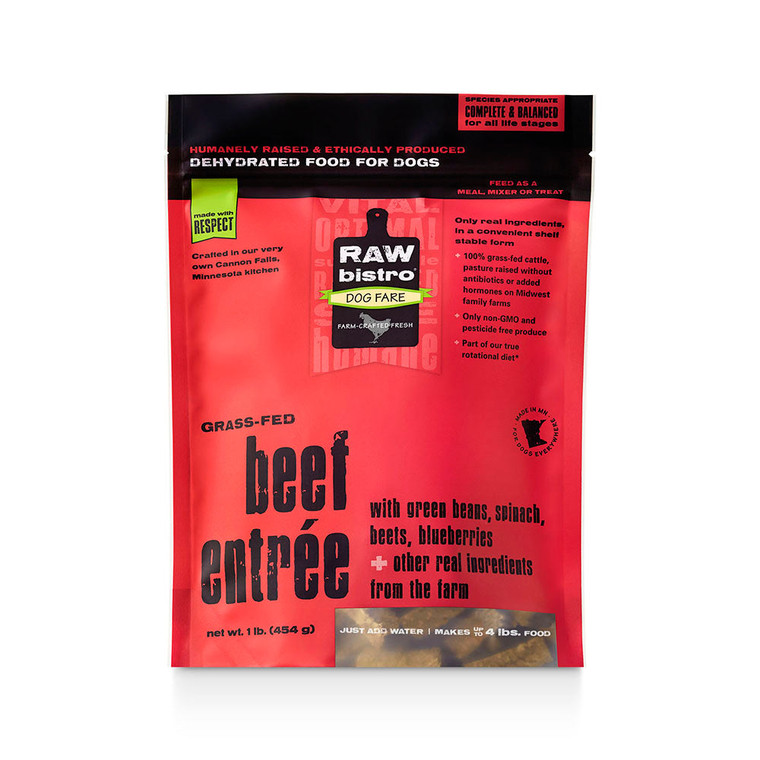
Raw Bistro
Dehydrated Beef Entree for Dogs - 1 lb
This entrée starts with regeneratively raised, grass-fed beef — not just muscle meat, but heart, liver, kidney, and ground bone, the same nutrient-dense parts a dog would seek out in the wild. Everything is dehydrated in small batches at a Minnesota kitchen, a gentler process than high-heat extrusion that keeps nutrients intact rather than cooking them away.
- Serve as a complete daily meal, a nutrient boost mixed into kibble, or a high-value training treat — one pound rehydrates into up to four pounds of food
- Built on whole-animal nutrition: muscle meat, organs, and bone from grass-fed cattle, plus organic vegetables and blueberries for fiber and antioxidants
- Complete and balanced for all life stages, with no grain fillers in the ingredient panel
Most dehydrated dog foods lean on muscle meat and a vitamin pack to check the nutrition box. This one starts differently: beef, beef heart, ground beef bone, beef liver, and beef kidney from regeneratively raised, grass-fed cattle -- the whole-prey model, not the shortcut version.
Each batch is built with organic green beans, spinach, beets, blueberries, and walnut oil for fiber and antioxidants, then dehydrated (not extruded) in small batches at Raw Bistro's Minnesota kitchen -- a process chosen specifically to preserve nutrition, flavor, and shelf stability without high-heat processing. The guaranteed analysis runs 42% crude protein and 36% crude fat (minimums), concentrated enough that one pound of this dehydrated beef dog food rehydrates into up to four pounds of finished food -- 5,280 kcal/kg, or 390 kcal per cup once prepared.
To serve, rehydrate with warm water and let it sit until it reaches a texture your dog enjoys -- use it as a stand-alone complete meal for dogs, a mix-in over kibble, or straight as a treat.
Customers feeding the dehydrated beef recipe consistently point to the convenience-without-compromise angle -- a shelf-stable format that still delivers whole-food nutrition their dogs actively want to eat.
Complete and balanced for all life stages, this recipe contains no grain fillers -- a species-appropriate, ancestral-style diet built around organ meat and bone the way dogs would eat in the wild -- and is shelf-stable; store in a cool, dry place, and once rehydrated, treat leftovers the way you would fresh food.
Ingredients: Beef, Beef Heart, Ground Beef Bone, Beef Liver, Beef Kidney, Organic Green Beans, Organic Spinach, Organic Beets, Organic Blueberries, Organic Walnut Oil, Organic Kelp, Inulin (extract of chicory), Sea Salt, Zinc Amino Acid Chelate, Vitamin E Supplement, Manganese Amino Acid Chelate, and Vitamin D3 Supplement.
Common Questions
How does this compare nutritically to a conventional dehydrated or kibble beef formula?
This recipe runs 42% crude protein and 36% crude fat minimums, versus the 24-28% protein and 12-18% fat typical of conventional dehydrated or extruded kibble beef formulas. That difference comes from using whole-prey ratios of meat, heart, liver, kidney, and bone instead of a single muscle-meat source stretched with grain or plant protein isolates. Conventional formulas also usually rely on synthetic vitamin-mineral premixes to hit AAFCO minimums, while here the organ meats themselves supply much of the vitamin A, copper, iron, and B12 naturally. Because the food is dehydrated rather than extruded at high heat, less protein denaturation and nutrient loss occurs during processing compared to standard kibble manufacturing, which typically involves temperatures of 300°F or higher.
What's the actual science behind grass-fed beef being more nutrient-dense?
Cattle finished entirely on pasture (rather than grain-finished in a feedlot for the last 3-6 months) produce meat with measurably different fat chemistry. Peer-reviewed comparisons show grass-fed beef carries roughly 2-5 times more omega-3 fatty acids (ALA, EPA, DHA) and 2-3 times more conjugated linoleic acid (CLA) than grain-finished beef, because the omega-3 precursors in grass pass directly into the animal's fat tissue instead of being diluted by corn and soy-based omega-6 fats. Omega-3s compete with omega-6-derived arachidonic acid for the same COX and LOX enzyme pathways, which is the mechanism behind their anti-inflammatory effect. CLA has been shown in animal studies to support lean muscle maintenance and modulate immune signaling. Grass-fed beef also tends to run higher in vitamin E and beta-carotene, both of which come directly from forage rather than a supplement pack.
Does this fit a keto, paleo, or prey-model feeding approach for dogs?
Yes. With 42% protein and 36% fat minimums and only 3% max crude fiber, the caloric macronutrient split is roughly 40% of calories from protein and close to 60% from fat, which lands squarely in ketogenic ratios and well below the carbohydrate load of most commercial dog foods. There are no grains, no potato starch, and no pea protein fillers — the carbohydrate sources are limited to a small amount of organic vegetables and fruit (green beans, spinach, beets, blueberries) included for fiber and micronutrients rather than as a calorie base. The inclusion of heart, liver, kidney, and bone mirrors the prey-model or ancestral-diet philosophy of feeding organs and bone alongside muscle meat rather than muscle meat alone. For owners following a carnivore-adjacent or low-carbohydrate protocol for their dog, this recipe's macro profile requires no reformulation to fit.
Can this be used in place of ground beef or pork in other homemade dog food recipes?
Yes, one pound of this dehydrated entrée rehydrates into approximately four pounds of finished food, so it can directly replace ground beef or ground pork in a homemade stew, meatloaf-style bake, or mixed-protein bowl at roughly a 1:4 substitution ratio once rehydrated. Because it already contains organ meat, bone, and vegetables, you don't need to add extra liver, kidney, or bone meal the way you would when substituting plain ground beef into a homemade balanced recipe. If a recipe calls for cooked ground beef, simply rehydrate with warm water to a thicker consistency rather than a soupy one to match the texture of browned meat. It also works cold, straight from rehydration, as a topper over kibble or as a standalone patty-style treat without any cooking step at all.
Why does this recipe include beef heart, kidney, and bone instead of just muscle meat?
Each organ contributes a nutrient that muscle meat alone doesn't supply in meaningful amounts. Beef heart is naturally rich in CoQ10 and taurine, both important for cardiac and muscle function. Beef liver is one of the most concentrated natural sources of vitamin A, copper, and B12, while beef kidney supplies selenium and additional B vitamins. Ground beef bone contributes calcium and phosphorus in the ratio naturally found in prey, rather than relying solely on a synthetic mineral supplement to balance the calcium-phosphorus ratio. This whole-prey construction is why the ingredient panel supports a complete-and-balanced claim with a shorter supplement list than most muscle-meat-based formulas, which typically need to add synthetic calcium sources and additional vitamin premixes to compensate.
Each batch is built with organic green beans, spinach, beets, blueberries, and walnut oil for fiber and antioxidants, then dehydrated (not extruded) in small batches at Raw Bistro's Minnesota kitchen -- a process chosen specifically to preserve nutrition, flavor, and shelf stability without high-heat processing. The guaranteed analysis runs 42% crude protein and 36% crude fat (minimums), concentrated enough that one pound of this dehydrated beef dog food rehydrates into up to four pounds of finished food -- 5,280 kcal/kg, or 390 kcal per cup once prepared.
To serve, rehydrate with warm water and let it sit until it reaches a texture your dog enjoys -- use it as a stand-alone complete meal for dogs, a mix-in over kibble, or straight as a treat.
Customers feeding the dehydrated beef recipe consistently point to the convenience-without-compromise angle -- a shelf-stable format that still delivers whole-food nutrition their dogs actively want to eat.
- "I feed the dehydrated raw beef and turkey and love the fact that my pup is eating a healthy meal but at the same time is convenient for me." -- Mary L., Verified Buyer
- "My pups love this food. I love feeding this knowing the high quality of the ingredients. This is the best way to mix and match with the different veggies/fruits in each recipe. I also very much appreciate how they care for the animals." -- Katy C., Verified Buyer
Complete and balanced for all life stages, this recipe contains no grain fillers -- a species-appropriate, ancestral-style diet built around organ meat and bone the way dogs would eat in the wild -- and is shelf-stable; store in a cool, dry place, and once rehydrated, treat leftovers the way you would fresh food.
Ingredients: Beef, Beef Heart, Ground Beef Bone, Beef Liver, Beef Kidney, Organic Green Beans, Organic Spinach, Organic Beets, Organic Blueberries, Organic Walnut Oil, Organic Kelp, Inulin (extract of chicory), Sea Salt, Zinc Amino Acid Chelate, Vitamin E Supplement, Manganese Amino Acid Chelate, and Vitamin D3 Supplement.
Common Questions
How does this compare nutritically to a conventional dehydrated or kibble beef formula?
This recipe runs 42% crude protein and 36% crude fat minimums, versus the 24-28% protein and 12-18% fat typical of conventional dehydrated or extruded kibble beef formulas. That difference comes from using whole-prey ratios of meat, heart, liver, kidney, and bone instead of a single muscle-meat source stretched with grain or plant protein isolates. Conventional formulas also usually rely on synthetic vitamin-mineral premixes to hit AAFCO minimums, while here the organ meats themselves supply much of the vitamin A, copper, iron, and B12 naturally. Because the food is dehydrated rather than extruded at high heat, less protein denaturation and nutrient loss occurs during processing compared to standard kibble manufacturing, which typically involves temperatures of 300°F or higher.
What's the actual science behind grass-fed beef being more nutrient-dense?
Cattle finished entirely on pasture (rather than grain-finished in a feedlot for the last 3-6 months) produce meat with measurably different fat chemistry. Peer-reviewed comparisons show grass-fed beef carries roughly 2-5 times more omega-3 fatty acids (ALA, EPA, DHA) and 2-3 times more conjugated linoleic acid (CLA) than grain-finished beef, because the omega-3 precursors in grass pass directly into the animal's fat tissue instead of being diluted by corn and soy-based omega-6 fats. Omega-3s compete with omega-6-derived arachidonic acid for the same COX and LOX enzyme pathways, which is the mechanism behind their anti-inflammatory effect. CLA has been shown in animal studies to support lean muscle maintenance and modulate immune signaling. Grass-fed beef also tends to run higher in vitamin E and beta-carotene, both of which come directly from forage rather than a supplement pack.
Does this fit a keto, paleo, or prey-model feeding approach for dogs?
Yes. With 42% protein and 36% fat minimums and only 3% max crude fiber, the caloric macronutrient split is roughly 40% of calories from protein and close to 60% from fat, which lands squarely in ketogenic ratios and well below the carbohydrate load of most commercial dog foods. There are no grains, no potato starch, and no pea protein fillers — the carbohydrate sources are limited to a small amount of organic vegetables and fruit (green beans, spinach, beets, blueberries) included for fiber and micronutrients rather than as a calorie base. The inclusion of heart, liver, kidney, and bone mirrors the prey-model or ancestral-diet philosophy of feeding organs and bone alongside muscle meat rather than muscle meat alone. For owners following a carnivore-adjacent or low-carbohydrate protocol for their dog, this recipe's macro profile requires no reformulation to fit.
Can this be used in place of ground beef or pork in other homemade dog food recipes?
Yes, one pound of this dehydrated entrée rehydrates into approximately four pounds of finished food, so it can directly replace ground beef or ground pork in a homemade stew, meatloaf-style bake, or mixed-protein bowl at roughly a 1:4 substitution ratio once rehydrated. Because it already contains organ meat, bone, and vegetables, you don't need to add extra liver, kidney, or bone meal the way you would when substituting plain ground beef into a homemade balanced recipe. If a recipe calls for cooked ground beef, simply rehydrate with warm water to a thicker consistency rather than a soupy one to match the texture of browned meat. It also works cold, straight from rehydration, as a topper over kibble or as a standalone patty-style treat without any cooking step at all.
Why does this recipe include beef heart, kidney, and bone instead of just muscle meat?
Each organ contributes a nutrient that muscle meat alone doesn't supply in meaningful amounts. Beef heart is naturally rich in CoQ10 and taurine, both important for cardiac and muscle function. Beef liver is one of the most concentrated natural sources of vitamin A, copper, and B12, while beef kidney supplies selenium and additional B vitamins. Ground beef bone contributes calcium and phosphorus in the ratio naturally found in prey, rather than relying solely on a synthetic mineral supplement to balance the calcium-phosphorus ratio. This whole-prey construction is why the ingredient panel supports a complete-and-balanced claim with a shorter supplement list than most muscle-meat-based formulas, which typically need to add synthetic calcium sources and additional vitamin premixes to compensate.
- __Storage_Location:
- Dry
- __Volume:
- 500
- __Owner:
- Raw Bistro
- __badge:
- Grass-Fed