

Dill Pickle Pork Rinds - 3 oz
Pork King Good
$4.99
(No reviews yet)

Write a Review
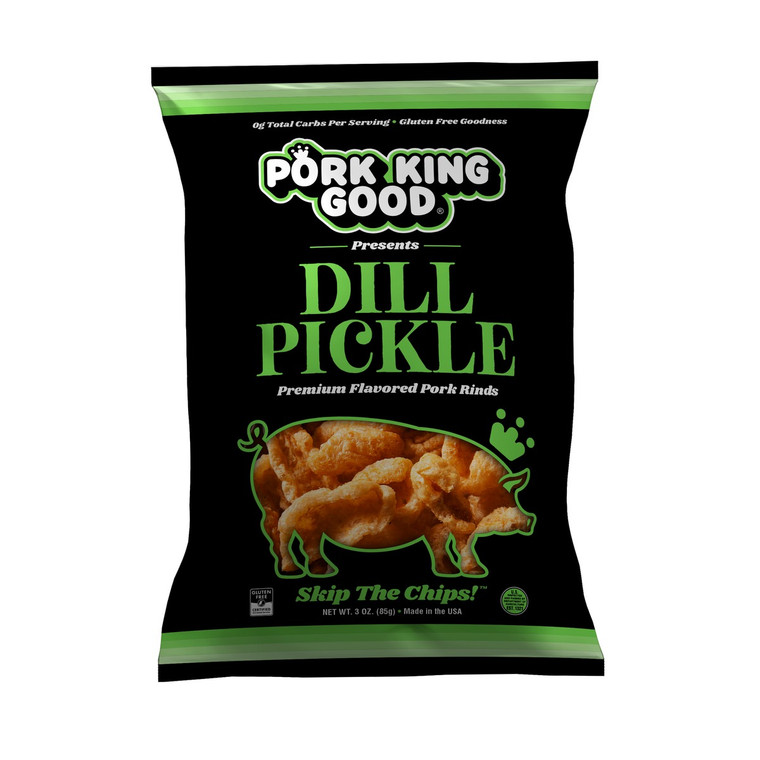
Pork King Good
Dill Pickle Pork Rinds - 3 oz
Rendered in Pork King Good's own pork fat at the 74-year-old Milwaukee plant they acquired outright in 2022, these Dill Pickle rinds deliver a bracing, vinegar-forward snap with 0g carbs per serving — built by the only woman-owned pork rind manufacturer in the country.
- Grab a bag for road trips, tailgates, lunchboxes, or the 3pm desk-drawer rescue when a pickle craving hits and a sandwich isn't in the cards
- Cooked in-house in the company's own rendered lard at a facility Pork King Good bought outright rather than outsourced to a co-packer
- Keto-formulated, paleo-friendly, and gluten-free, so there's no carb math required before you dig in
No dilly-dallying: Pork King Good's Dill Pickle Pork Rinds hit like biting straight into a barrel-cured spear -- sharp vinegar tang up front, a clean salty finish, and not a trace of sugar-coating to soften the sour.
Each 3 oz bag is cooked in small batches in the company's own rendered pork fat at their Milwaukee facility -- the same 74-year-old plant Pork King Good started as a customer of before buying the whole operation in May 2022, making them the only woman-owned pork rind manufacturer in the country. That ownership means the flavor lineup (this one included) is developed and approved in-house, not handed off to a private-label formulator.
Nutritionally, it's a snack you don't have to negotiate with: 80 calories and 0g carbohydrates per serving, making these low-carb pork rinds a smart keto or paleo choice that won't eat into your macros. The pickle flavor comes from spice extractives rather than added starches or dextrose, which is where a lot of flavored pork rinds quietly pick up carbs.
Keep a bag in the car for road trips, in the pantry for movie night, or in a desk drawer for the afternoon slump -- it holds its crunch and its tang whether you're three days or three weeks into the bag.
Suitable for keto, paleo, and gluten-free diets. Store in a cool, dry place; reseal the bag between servings to keep the crunch.
Ingredients: Pork Rinds (Cooked in Pork Fat), Salt, Sodium Diacetate, and Spice Extractives.
Common Questions
How does this compare nutritionally to regular potato chips or flavored pork rinds from other brands?
A one-ounce serving of Dill Pickle Pork Rinds runs 80 calories and 0 grams of carbohydrate, compared to roughly 150-160 calories and 15 grams of carbohydrate in the same weight of potato chips. The bigger difference shows up against other flavored pork rinds: many competitors add dextrose, maltodextrin, or starch-based seasoning blends to hit a tangy flavor, which pushes their carb count to 1-3 grams per serving even though the base product is still fried pork skin. This one gets its sourness from spice extractives instead, so the carb count stays at zero. Protein also comes in higher relative to fat than chips, since there's no potato starch diluting the macros.
What is sodium diacetate doing in the ingredient list, and is it something to worry about?
Sodium diacetate is the sodium salt of acetic acid, the same acid that gives vinegar its sourness, and it's added here in small amounts to reinforce the pickle tang and act as a mild preservative. It works by lowering the surface pH of the rind slightly, which slows bacterial growth and helps the seasoning stay stable in the bag over time rather than fading. It's a common food-grade additive approved by the FDA and used widely in vinegar-flavored chips and pickled products, not a synthetic flavor compound. Functionally it's doing the same job a wet vinegar bath would do, just without adding moisture that would soften the crunch.
Where does this fit on keto, paleo, or carnivore eating plans?
At 0 grams of carbohydrate and roughly 9 grams each of fat and protein per one-ounce serving, it fits keto macros without needing to be tracked closely, since there's no carbohydrate load to subtract from a daily allotment. For paleo, the ingredient list is short enough to clear most standards: pork, salt, a food-safe acidulant, and spice extractives, with nothing derived from grain, dairy, or legumes. Strict carnivore eaters sometimes screen out spice extractives since they originate from plants, even in trace amounts, so it's worth checking your own protocol's tolerance for seasoning if you're doing zero-plant carnivore. Outside of that edge case, it slots cleanly into any of the three.
What can I pair this with beyond eating it straight from the bag?
The dill tang works well alongside foods that usually get paired with pickles anyway: a smoked salmon and cream cheese plate, a bunless burger where you'd normally reach for a pickle spear, or a cobb salad that needs a salty-sour crunch element. It also holds up next to ranch or blue cheese dressing as a dipper, and pairs naturally with a charcuterie spread of cured meats and hard cheese since the acidity cuts through the fat the same way a pickle would on a board. Because the seasoning is dry rather than a wet brine, it won't add moisture to whatever it's sitting next to on a plate.
How can I verify the woman-owned and in-house manufacturing claims?
Pork King Good purchased its Milwaukee production facility outright in May 2022, a plant that had already been operating for 74 years before the acquisition, which is documented in the company's own history and public business records. That ownership is what makes them the only woman-owned pork rind manufacturer in the country, a distinction tied to actual plant ownership rather than a licensing or co-packing arrangement. Because they own the facility, flavor development including this dill pickle blend is formulated and approved by their own team rather than outsourced to a private-label seasoning house. Certifications listed on the bag, including Keto Certified and Gluten-Free, reflect third-party lab verification of carb content and the absence of gluten-containing ingredients, not just a self-declared label.
Why does the ingredient list matter for someone counting macros closely?
The full ingredient list is pork rinds cooked in pork fat, salt, sodium diacetate, and spice extractives, with nothing else added. That matters because a lot of the carb creep in flavored pork rinds comes from bulking agents like corn starch or maltodextrin used to help powdered seasoning stick evenly to the rind. Spice extractives are concentrated flavor compounds pulled directly from the spice itself, so they deliver the dill and vinegar notes without needing a starch carrier. For anyone tracking net carbs to the gram, that difference is the reason this snack reads as a clean zero rather than a rounded-down number.
Each 3 oz bag is cooked in small batches in the company's own rendered pork fat at their Milwaukee facility -- the same 74-year-old plant Pork King Good started as a customer of before buying the whole operation in May 2022, making them the only woman-owned pork rind manufacturer in the country. That ownership means the flavor lineup (this one included) is developed and approved in-house, not handed off to a private-label formulator.
Nutritionally, it's a snack you don't have to negotiate with: 80 calories and 0g carbohydrates per serving, making these low-carb pork rinds a smart keto or paleo choice that won't eat into your macros. The pickle flavor comes from spice extractives rather than added starches or dextrose, which is where a lot of flavored pork rinds quietly pick up carbs.
Keep a bag in the car for road trips, in the pantry for movie night, or in a desk drawer for the afternoon slump -- it holds its crunch and its tang whether you're three days or three weeks into the bag.
Suitable for keto, paleo, and gluten-free diets. Store in a cool, dry place; reseal the bag between servings to keep the crunch.
Ingredients: Pork Rinds (Cooked in Pork Fat), Salt, Sodium Diacetate, and Spice Extractives.
Common Questions
How does this compare nutritionally to regular potato chips or flavored pork rinds from other brands?
A one-ounce serving of Dill Pickle Pork Rinds runs 80 calories and 0 grams of carbohydrate, compared to roughly 150-160 calories and 15 grams of carbohydrate in the same weight of potato chips. The bigger difference shows up against other flavored pork rinds: many competitors add dextrose, maltodextrin, or starch-based seasoning blends to hit a tangy flavor, which pushes their carb count to 1-3 grams per serving even though the base product is still fried pork skin. This one gets its sourness from spice extractives instead, so the carb count stays at zero. Protein also comes in higher relative to fat than chips, since there's no potato starch diluting the macros.
What is sodium diacetate doing in the ingredient list, and is it something to worry about?
Sodium diacetate is the sodium salt of acetic acid, the same acid that gives vinegar its sourness, and it's added here in small amounts to reinforce the pickle tang and act as a mild preservative. It works by lowering the surface pH of the rind slightly, which slows bacterial growth and helps the seasoning stay stable in the bag over time rather than fading. It's a common food-grade additive approved by the FDA and used widely in vinegar-flavored chips and pickled products, not a synthetic flavor compound. Functionally it's doing the same job a wet vinegar bath would do, just without adding moisture that would soften the crunch.
Where does this fit on keto, paleo, or carnivore eating plans?
At 0 grams of carbohydrate and roughly 9 grams each of fat and protein per one-ounce serving, it fits keto macros without needing to be tracked closely, since there's no carbohydrate load to subtract from a daily allotment. For paleo, the ingredient list is short enough to clear most standards: pork, salt, a food-safe acidulant, and spice extractives, with nothing derived from grain, dairy, or legumes. Strict carnivore eaters sometimes screen out spice extractives since they originate from plants, even in trace amounts, so it's worth checking your own protocol's tolerance for seasoning if you're doing zero-plant carnivore. Outside of that edge case, it slots cleanly into any of the three.
What can I pair this with beyond eating it straight from the bag?
The dill tang works well alongside foods that usually get paired with pickles anyway: a smoked salmon and cream cheese plate, a bunless burger where you'd normally reach for a pickle spear, or a cobb salad that needs a salty-sour crunch element. It also holds up next to ranch or blue cheese dressing as a dipper, and pairs naturally with a charcuterie spread of cured meats and hard cheese since the acidity cuts through the fat the same way a pickle would on a board. Because the seasoning is dry rather than a wet brine, it won't add moisture to whatever it's sitting next to on a plate.
How can I verify the woman-owned and in-house manufacturing claims?
Pork King Good purchased its Milwaukee production facility outright in May 2022, a plant that had already been operating for 74 years before the acquisition, which is documented in the company's own history and public business records. That ownership is what makes them the only woman-owned pork rind manufacturer in the country, a distinction tied to actual plant ownership rather than a licensing or co-packing arrangement. Because they own the facility, flavor development including this dill pickle blend is formulated and approved by their own team rather than outsourced to a private-label seasoning house. Certifications listed on the bag, including Keto Certified and Gluten-Free, reflect third-party lab verification of carb content and the absence of gluten-containing ingredients, not just a self-declared label.
Why does the ingredient list matter for someone counting macros closely?
The full ingredient list is pork rinds cooked in pork fat, salt, sodium diacetate, and spice extractives, with nothing else added. That matters because a lot of the carb creep in flavored pork rinds comes from bulking agents like corn starch or maltodextrin used to help powdered seasoning stick evenly to the rind. Spice extractives are concentrated flavor compounds pulled directly from the spice itself, so they deliver the dill and vinegar notes without needing a starch carrier. For anyone tracking net carbs to the gram, that difference is the reason this snack reads as a clean zero rather than a rounded-down number.
- __Storage_Location:
- Dry
- __Volume:
- 400
- __Owner:
- Pork King Good
- __badge:
- Keto