

Dill Pickle Seasoning - 4.25 oz
Pork King Good
$7.99
Below are the available bulk discount rates for each individual item when you purchase a certain amount
- Buy 2 or above and get 6% off
(No reviews yet)

Write a Review
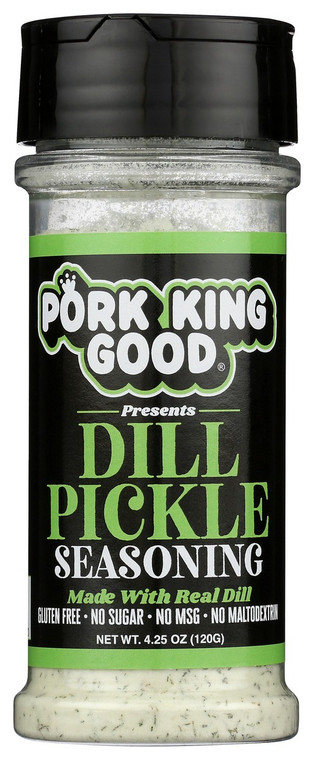
Pork King Good
Dill Pickle Seasoning - 4.25 oz
Pork King Good is the only woman-owned pork rind manufacturer in the country, running out of a 74-year-old Cudahy, Wisconsin plant it bought outright in 2022 — and the same clean-label instinct that goes into its rinds goes into this shaker. Four ingredients, real dill weed, and the tang of an actual pickle barrel, with nothing added to fake the flavor.
- Shake it onto popcorn, roasted veggies, chicken, chips, nuts, eggs, or sour cream — or stir it straight into a pickling brine for a shortcut dill crock.
- A four-ingredient label — salt, sodium diacetate, spice extractives, and real dill weed — with no dextrose, maltodextrin, or anti-caking fillers standing in for flavor.
- Keto-friendly, paleo-friendly, and gluten-free, so it drops into a low-carb kitchen without a second label check.
Pork King Good didn't set out to make the world's best dill pickle seasoning — they just got tired of pickle-flavored anything tasting like an afterthought. So they built one with real dill weed doing the actual work.
This is a four-ingredient shaker: salt, sodium diacetate (the same tang agent that gives real dill pickles their bite), spice extractives, and dill weed. No sugar, no dextrose, no maltodextrin bulking it out — the kind of shortcuts that show up in most grocery-aisle seasoning blends to stretch a bag cheaply. What's left is straightforward pickle flavor without a carb tax.
Use it the way Pork King Good's Cudahy, Wisconsin test kitchen does: on popcorn, roasted veggies, grilled chicken, chips, nuts, deviled eggs, sour cream dip, or Pork King Good's own pork rinds for a pickle-and-pork combo. It also works as a seasoning base if you're pickling your own vegetables at home and want a head start on flavor.
Keto-compliant, paleo-friendly, and gluten-free by ingredient list, not by asterisk. This seasoning is blended and bottled right in Pork King Good's Cudahy, Wisconsin facility, so you know exactly where it's coming from. Store the shaker in a cool, dry pantry — it's shelf-stable and doesn't need refrigeration.
Ingredients: Salt, Sodium Diacetate, Spice Extractives, and Dill Weed.
Common Questions
How does this compare to a typical grocery store pickle seasoning?
Most bagged pickle-flavor seasonings list sugar, dextrose, or maltodextrin in the first five ingredients because those are cheap bulking agents that stretch a batch cheaply. This shaker has four ingredients total: salt, sodium diacetate, spice extractives, and dill weed, with zero grams of sugar or added carbohydrate per serving. A typical conventional pickle seasoning runs 1-2 grams of carbs per quarter-teaspoon from dextrose or sugar; this one runs 0 grams because there's nothing in it to contribute carbs beyond trace amounts in the dill weed itself. The tradeoff is that you're paying for a smaller, more concentrated ingredient list rather than a bag padded with filler.
What does sodium diacetate actually do, and is it the same thing that makes real pickles sour?
Sodium diacetate is a compound made from acetic acid (the acid in vinegar) bound to sodium, and it's the same tang-delivery mechanism used in commercial pickle brining and in some barbecue rubs and chip seasonings to mimic vinegar's sourness without adding liquid. It hits your tongue's sour receptors the way vinegar does but stays shelf-stable as a dry powder, which is why it can sit in a shaker instead of a jar of brine. Food scientists use it specifically because it delivers a sharper, more pronounced tang per gram than plain citric acid, which is part of why a small dusting of this seasoning reads as distinctly dill-pickle rather than just herby. It's the same additive that's been used in real pickle production and pickle-flavored snack coatings for decades, so it's not a synthetic flavor trick — it's doing the actual acid work.
Does this fit into keto, paleo, or carnivore eating?
Yes to all three, and the ingredient list is short enough to verify in about five seconds: salt, sodium diacetate, spice extractives, and dill weed, with no sugar, starch, or grain-derived fillers. A quarter-teaspoon serving carries effectively 0 net carbs, so it doesn't touch a daily carb allotment on keto, which usually caps around 20-25 grams net carbs. Paleo eaters can use it because there's no legume, grain, or refined sugar in the mix, and it leans on whole dill weed and salt rather than processed flavor compounds. Carnivore followers who allow salt and spice extracts (rather than strict zero-plant carnivore) commonly use it on eggs, meat, and pork rinds since it doesn't introduce any starchy carrier.
What dishes work best with this seasoning, and does it need any recipe adjustment?
It's built to dust onto finished or near-finished food rather than cook down in liquid, so popcorn, roasted vegetables, grilled chicken, potato or vegetable chips, roasted nuts, deviled egg yolks, sour cream or Greek yogurt dip, and pork rinds are the most direct uses. If you're using it as a rub before cooking meat, apply it after any oil so it adheres, and go lighter than you would with a sugar-based rub since there's no sweetness to balance the salt and tang — start with half the amount you'd normally use and adjust up. For homemade pickling, it works as a flavor base you sprinkle into the jar alongside your own vinegar and salt ratio, though it's not a substitute for the vinegar itself since sodium diacetate provides tang, not the acidity needed for safe preservation. It also holds up well mixed directly into sour cream or mayo-based dips without breaking or clumping.
How can I verify the keto, paleo, and gluten-free claims on the label?
The fastest check is the ingredient list itself: salt, sodium diacetate, spice extractives, and dill weed contains no wheat, barley, rye, grain derivative, legume, or added sugar, which covers the standard exclusion criteria for gluten-free, paleo, and keto compliance without relying on a certifying body's stamp. Pork King Good lists these four ingredients in full rather than using an umbrella term like natural flavors, which is the detail worth checking on any competing seasoning making the same diet claims. The product also carries a No Artificial Ingredients, Colors or Flavors designation, meaning the spice extractives are derived from actual spices rather than lab-synthesized flavor compounds. Because the formula has so few components, there's little room for hidden gluten, sugar, or filler to slip in undeclared.
What does it mean that this is a woman-owned brand, and does that affect the product itself?
Pork King Good is a woman-owned company, which is a business ownership designation rather than a flavor or ingredient claim, but it does reflect the company's origin story of a small Milwaukee-based operation building products because existing options fell short, rather than a large co-packer running a formula through committee. That smaller-operation structure is part of why the ingredient list stayed at four items instead of expanding to include cheaper bulking agents that a larger commodity seasoning line might add to cut cost per unit. It doesn't change the nutritional content of the seasoning itself, but it's a relevant data point for buyers who specifically look for women-owned food brands when making purchasing decisions.
This is a four-ingredient shaker: salt, sodium diacetate (the same tang agent that gives real dill pickles their bite), spice extractives, and dill weed. No sugar, no dextrose, no maltodextrin bulking it out — the kind of shortcuts that show up in most grocery-aisle seasoning blends to stretch a bag cheaply. What's left is straightforward pickle flavor without a carb tax.
Use it the way Pork King Good's Cudahy, Wisconsin test kitchen does: on popcorn, roasted veggies, grilled chicken, chips, nuts, deviled eggs, sour cream dip, or Pork King Good's own pork rinds for a pickle-and-pork combo. It also works as a seasoning base if you're pickling your own vegetables at home and want a head start on flavor.
Keto-compliant, paleo-friendly, and gluten-free by ingredient list, not by asterisk. This seasoning is blended and bottled right in Pork King Good's Cudahy, Wisconsin facility, so you know exactly where it's coming from. Store the shaker in a cool, dry pantry — it's shelf-stable and doesn't need refrigeration.
Ingredients: Salt, Sodium Diacetate, Spice Extractives, and Dill Weed.
Common Questions
How does this compare to a typical grocery store pickle seasoning?
Most bagged pickle-flavor seasonings list sugar, dextrose, or maltodextrin in the first five ingredients because those are cheap bulking agents that stretch a batch cheaply. This shaker has four ingredients total: salt, sodium diacetate, spice extractives, and dill weed, with zero grams of sugar or added carbohydrate per serving. A typical conventional pickle seasoning runs 1-2 grams of carbs per quarter-teaspoon from dextrose or sugar; this one runs 0 grams because there's nothing in it to contribute carbs beyond trace amounts in the dill weed itself. The tradeoff is that you're paying for a smaller, more concentrated ingredient list rather than a bag padded with filler.
What does sodium diacetate actually do, and is it the same thing that makes real pickles sour?
Sodium diacetate is a compound made from acetic acid (the acid in vinegar) bound to sodium, and it's the same tang-delivery mechanism used in commercial pickle brining and in some barbecue rubs and chip seasonings to mimic vinegar's sourness without adding liquid. It hits your tongue's sour receptors the way vinegar does but stays shelf-stable as a dry powder, which is why it can sit in a shaker instead of a jar of brine. Food scientists use it specifically because it delivers a sharper, more pronounced tang per gram than plain citric acid, which is part of why a small dusting of this seasoning reads as distinctly dill-pickle rather than just herby. It's the same additive that's been used in real pickle production and pickle-flavored snack coatings for decades, so it's not a synthetic flavor trick — it's doing the actual acid work.
Does this fit into keto, paleo, or carnivore eating?
Yes to all three, and the ingredient list is short enough to verify in about five seconds: salt, sodium diacetate, spice extractives, and dill weed, with no sugar, starch, or grain-derived fillers. A quarter-teaspoon serving carries effectively 0 net carbs, so it doesn't touch a daily carb allotment on keto, which usually caps around 20-25 grams net carbs. Paleo eaters can use it because there's no legume, grain, or refined sugar in the mix, and it leans on whole dill weed and salt rather than processed flavor compounds. Carnivore followers who allow salt and spice extracts (rather than strict zero-plant carnivore) commonly use it on eggs, meat, and pork rinds since it doesn't introduce any starchy carrier.
What dishes work best with this seasoning, and does it need any recipe adjustment?
It's built to dust onto finished or near-finished food rather than cook down in liquid, so popcorn, roasted vegetables, grilled chicken, potato or vegetable chips, roasted nuts, deviled egg yolks, sour cream or Greek yogurt dip, and pork rinds are the most direct uses. If you're using it as a rub before cooking meat, apply it after any oil so it adheres, and go lighter than you would with a sugar-based rub since there's no sweetness to balance the salt and tang — start with half the amount you'd normally use and adjust up. For homemade pickling, it works as a flavor base you sprinkle into the jar alongside your own vinegar and salt ratio, though it's not a substitute for the vinegar itself since sodium diacetate provides tang, not the acidity needed for safe preservation. It also holds up well mixed directly into sour cream or mayo-based dips without breaking or clumping.
How can I verify the keto, paleo, and gluten-free claims on the label?
The fastest check is the ingredient list itself: salt, sodium diacetate, spice extractives, and dill weed contains no wheat, barley, rye, grain derivative, legume, or added sugar, which covers the standard exclusion criteria for gluten-free, paleo, and keto compliance without relying on a certifying body's stamp. Pork King Good lists these four ingredients in full rather than using an umbrella term like natural flavors, which is the detail worth checking on any competing seasoning making the same diet claims. The product also carries a No Artificial Ingredients, Colors or Flavors designation, meaning the spice extractives are derived from actual spices rather than lab-synthesized flavor compounds. Because the formula has so few components, there's little room for hidden gluten, sugar, or filler to slip in undeclared.
What does it mean that this is a woman-owned brand, and does that affect the product itself?
Pork King Good is a woman-owned company, which is a business ownership designation rather than a flavor or ingredient claim, but it does reflect the company's origin story of a small Milwaukee-based operation building products because existing options fell short, rather than a large co-packer running a formula through committee. That smaller-operation structure is part of why the ingredient list stayed at four items instead of expanding to include cheaper bulking agents that a larger commodity seasoning line might add to cut cost per unit. It doesn't change the nutritional content of the seasoning itself, but it's a relevant data point for buyers who specifically look for women-owned food brands when making purchasing decisions.
- __Storage_Location:
- Dry
- __Volume:
- 400
- __Owner:
- Pork King Good
- __badge:
- Keto