

Himalayan Pink Salt & Vinegar Pork Rinds - 7 oz
Pork King Good
$11.99
(No reviews yet)

Write a Review
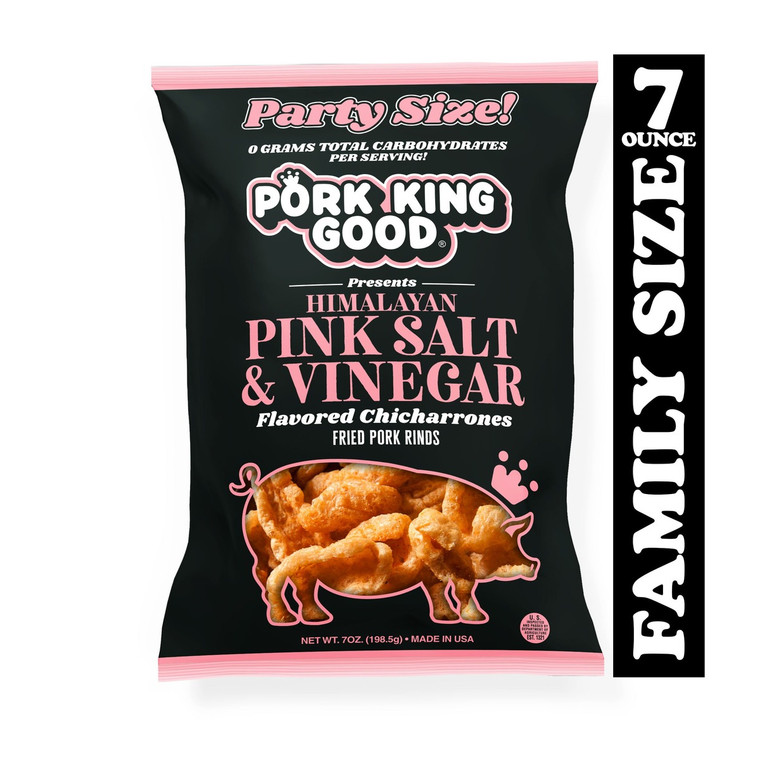
Pork King Good
Himalayan Pink Salt & Vinegar Pork Rinds - 7 oz
Pork King Good sent someone to the actual Himalayas to get the salt right, then ran it through a 74-year-old Wisconsin recipe the company doesn't outsource — these chicharrones are fried and seasoned in-house, with a vinegar tang sharp enough to make you forget potatoes exist. Every bag comes from the only woman-owned pork rind manufacturing plant in the country, built on generations of know-how the brand bought outright rather than licensed.
- 7 oz party-size bag for tailgates, road trips, or the desk drawer that needed an upgrade from stale chips
- Cooked in the company's own rendered pork fat at its Cudahy, Wisconsin facility — not a co-packed recipe from an anonymous supplier
- Zero grams total carbohydrate per serving, keto- and paleo-friendly, gluten-free by nature — no wheat, no artificial flavors
Pork King Good says they "traveled the Himalayas and licked every mountain" to nail this flavor — which is their way of admitting a lot of trial and error went into getting the salt-and-vinegar ratio to actually taste like the chip-aisle classic, minus the chip.
This is the 7 oz Party Size bag: fried chicharrones cooked in the company's own rendered pork fat, hit with Himalayan pink salt and a vinegar tang, then bagged at the Wisconsin plant Pork King Good acquired in May 2022 — a 74-year-old manufacturer with generations of recipes behind it. That acquisition made Pork King Good the only woman-owned pork rind manufacturing business in the country, not just a brand that private-labels someone else's fryer.
Every serving carries zero grams of total carbohydrate, straight from the nutrition label — a real number, not a rounding trick, since there's no starch in the ingredient list to begin with.
Eat it straight from the bag: at a tailgate, in a lunch bag, or anywhere a salty-sour crunch is called for without the carb math that comes with a real bag of chips.
Keto-friendly, paleo-friendly, and gluten-free without needing a wheat-free reformulation — pork, fat, and seasoning is all that's ever been in a pork rind. Reseal the bag and keep it in a cool, dry pantry to hold the crunch.
Ingredients: Pork Rinds (Cooked in Pork Fat), Himalayan Salt, Sea Salt, Sodium Diacetate, and Citric Acid.
Common Questions
How does the carb count compare to a regular bag of salt and vinegar potato chips?
A typical 1 oz serving of salt and vinegar potato chips runs around 15 grams of total carbohydrate from the potato starch itself. This pork rind carries 0 grams of total carbohydrate per serving because there's no potato, corn, or grain in it — the entire product is fried pork skin and seasoning. For anyone counting net carbs, that's the difference between a snack that fits a keto macro target and one that doesn't.
Is this actually keto and paleo compliant, or just marketed that way?
The ingredient list is pork rinds cooked in pork fat, Himalayan salt, sea salt, sodium diacetate, and citric acid — no starches, sugars, or grain-based fillers of any kind. That composition is inherently zero-carb, which is why pork rinds are one of the few packaged snacks that fit keto and paleo eating patterns without reformulation. There's no asterisk here: the macros are a byproduct of what pork skin is, not an engineered claim.
Is Pork King Good actually gluten-free, or just free of wheat as an ingredient?
The product contains pork, pork fat, and mineral-based seasonings — no wheat, barley, rye, or cross-contaminating grain ingredient appears anywhere on the label. Gluten-free is a structural fact of a pork-and-salt product, not a substitution the brand had to engineer.
What's the best way to eat these beyond straight from the bag?
They're built to be eaten as a stand-alone snack — pack the bag for a road trip, a tailgate, or a desk drawer where a low-carb crunch beats vending machine chips. Pair with a cold dip like guacamole or a sour cream and onion blend if you want a chip-and-dip moment without the chip.
What makes Pork King Good different from a private-label pork rind brand?
Pork King Good started as a customer of The Porkie Company of Wisconsin in 2018, grew into one of that manufacturer's biggest accounts on flavor innovation alone, then bought the 74-year-old plant outright in May 2022. That makes Pork King Good the only woman-owned pork rind manufacturing business in the country — they control the fryer, the fat, and the recipe instead of licensing someone else's production line.
Where is this product actually made?
It's produced at Pork King Good's own manufacturing facility in Milwaukee, Wisconsin — the same plant with a 74-year production history that the company acquired in 2022, rather than a contract manufacturer in another state.
Why Himalayan pink salt instead of regular table salt?
Himalayan pink salt is a coarser, mineral-flecked salt that Pork King Good uses to season this batch alongside sea salt, giving the vinegar tang a slower, less one-note salt hit than fine table salt delivers. It's a flavor and texture choice on top of the same sodium function any salt provides.
This is the 7 oz Party Size bag: fried chicharrones cooked in the company's own rendered pork fat, hit with Himalayan pink salt and a vinegar tang, then bagged at the Wisconsin plant Pork King Good acquired in May 2022 — a 74-year-old manufacturer with generations of recipes behind it. That acquisition made Pork King Good the only woman-owned pork rind manufacturing business in the country, not just a brand that private-labels someone else's fryer.
Every serving carries zero grams of total carbohydrate, straight from the nutrition label — a real number, not a rounding trick, since there's no starch in the ingredient list to begin with.
Eat it straight from the bag: at a tailgate, in a lunch bag, or anywhere a salty-sour crunch is called for without the carb math that comes with a real bag of chips.
Keto-friendly, paleo-friendly, and gluten-free without needing a wheat-free reformulation — pork, fat, and seasoning is all that's ever been in a pork rind. Reseal the bag and keep it in a cool, dry pantry to hold the crunch.
Ingredients: Pork Rinds (Cooked in Pork Fat), Himalayan Salt, Sea Salt, Sodium Diacetate, and Citric Acid.
Common Questions
How does the carb count compare to a regular bag of salt and vinegar potato chips?
A typical 1 oz serving of salt and vinegar potato chips runs around 15 grams of total carbohydrate from the potato starch itself. This pork rind carries 0 grams of total carbohydrate per serving because there's no potato, corn, or grain in it — the entire product is fried pork skin and seasoning. For anyone counting net carbs, that's the difference between a snack that fits a keto macro target and one that doesn't.
Is this actually keto and paleo compliant, or just marketed that way?
The ingredient list is pork rinds cooked in pork fat, Himalayan salt, sea salt, sodium diacetate, and citric acid — no starches, sugars, or grain-based fillers of any kind. That composition is inherently zero-carb, which is why pork rinds are one of the few packaged snacks that fit keto and paleo eating patterns without reformulation. There's no asterisk here: the macros are a byproduct of what pork skin is, not an engineered claim.
Is Pork King Good actually gluten-free, or just free of wheat as an ingredient?
The product contains pork, pork fat, and mineral-based seasonings — no wheat, barley, rye, or cross-contaminating grain ingredient appears anywhere on the label. Gluten-free is a structural fact of a pork-and-salt product, not a substitution the brand had to engineer.
What's the best way to eat these beyond straight from the bag?
They're built to be eaten as a stand-alone snack — pack the bag for a road trip, a tailgate, or a desk drawer where a low-carb crunch beats vending machine chips. Pair with a cold dip like guacamole or a sour cream and onion blend if you want a chip-and-dip moment without the chip.
What makes Pork King Good different from a private-label pork rind brand?
Pork King Good started as a customer of The Porkie Company of Wisconsin in 2018, grew into one of that manufacturer's biggest accounts on flavor innovation alone, then bought the 74-year-old plant outright in May 2022. That makes Pork King Good the only woman-owned pork rind manufacturing business in the country — they control the fryer, the fat, and the recipe instead of licensing someone else's production line.
Where is this product actually made?
It's produced at Pork King Good's own manufacturing facility in Milwaukee, Wisconsin — the same plant with a 74-year production history that the company acquired in 2022, rather than a contract manufacturer in another state.
Why Himalayan pink salt instead of regular table salt?
Himalayan pink salt is a coarser, mineral-flecked salt that Pork King Good uses to season this batch alongside sea salt, giving the vinegar tang a slower, less one-note salt hit than fine table salt delivers. It's a flavor and texture choice on top of the same sodium function any salt provides.
- __Storage_Location:
- Dry
- __Volume:
- 400
- __Owner:
- Pork King Good
- __badge:
- Keto