

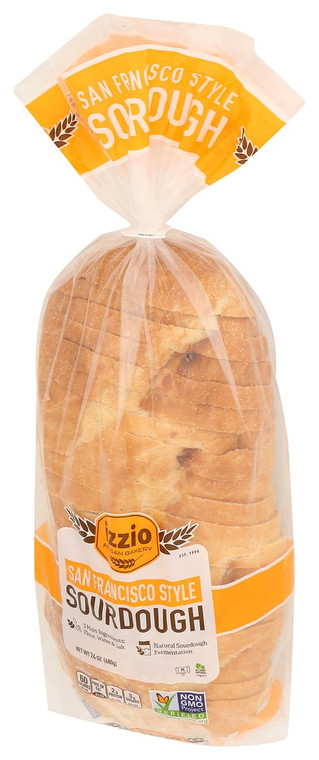
San Francisco Style Sourdough Batard - 24 oz
Izzio Artisan Bakery
$4.99
Below are the available bulk discount rates for each individual item when you purchase a certain amount
- Buy 2 - 5 and get 2% off
- Buy 6 - 11 and get 4% off
- Buy 12 or above and get 8% off
(No reviews yet)

Write a Review
Izzio Artisan Bakery
San Francisco Style Sourdough Batard - 24 oz
Real sourdough takes three days and a living culture — not three hours and a bottle of vinegar. Our San Francisco Style Sourdough Batard is built the way bakers did it before "sourdough" became a marketing word: an original mother culture, custom-milled flour we can trace back to the farm, and flour, water, and salt given the time they actually need to ferment.
- Sliced for sandwiches, toasted for breakfast, or torn fresh at the table — the oval batard shape, open crumb, and caramelized crust are built for all three.
- Fermented with our original mother starter — no vinegar, no vital wheat gluten, no "sourdough flavoring" standing in for the real thing.
- Slow natural fermentation breaks down gluten more thoroughly than quick-proofed bread, a difference many people sensitive to conventional bread notice — though this remains wheat bread, not gluten-free.
Most of what's labeled "sourdough" at the grocery store isn't. It's yeasted white bread with vinegar or manufactured "sourdough flavoring" added for tang, sometimes bulked up with vital wheat gluten to fake an open crumb. Our San Francisco Style Sourdough Batard skips all of it — this frozen artisan loaf is fermented the way sourdough has been made for thousands of years, with a living mother culture and nothing standing in for time.
Shaped into a classic oval batard and baked in small batches at our family bakery in Colorado, this loaf carries the tang, porous crumb, and deeply caramelized crust that put San Francisco sourdough on the map. We collaborated with local farmers and millers to build our own custom flour blend, so every batch can be traced back to the field it grew in — no GMOs, no unnecessary enrichments, no additives doing the work fermentation is supposed to do.
Slice it thick for grilled cheese or bruschetta, toast it for a sturdy breakfast, or serve it warm with olive oil and butter — the crust holds and the open crumb soaks up whatever you're serving without falling apart.
Traditional slow fermentation breaks gluten down more thoroughly than the quick-proofed dough behind most commercial bread, which is why people who find conventional sourdough hard to digest often do fine with ours — though this is wheat bread, not gluten-free, and isn't appropriate for anyone avoiding gluten entirely. As a grain-based loaf, it's also not suited to keto, paleo, or carnivore diets, even with its short, clean ingredient list. Keep frozen until ready to use, then thaw and finish in the oven to bring the crust back to life.
Ingredients: Wheat Flour (Wheat Flour, Malted Barley Flour), Water, Sea Salt, Sourdough Culture (Wheat Flour, Water), and Enzymes.
Common Questions
How does this loaf actually differ from the sourdough sold at a typical grocery store?
Most supermarket "sourdough" is made with commercial baker's yeast on a 3 to 4 hour proof, then gets its tang from added vinegar or citric acid, plus vital wheat gluten (usually 2 to 4 percent of the flour weight) to force an open crumb the fast proof can't build on its own. This batard uses only a live mother culture, wheat flour, malted barley flour, water, sea salt, and enzymes, fermented 18 to 24 hours. That long fermentation is what produces the sour flavor and open crumb naturally, so there's nothing added to fake either one. The tradeoff is shelf life and consistency, which is why this loaf is baked in small batches rather than mass-produced.
What actually happens during fermentation that makes this bread easier to digest for some people?
Over the 18 to 24 hour ferment, wild yeast and lactic acid bacteria in the culture produce organic acids, mainly lactic and acetic acid, which drop the dough's pH to roughly 3.8 to 4.2. That acidity activates phytase, an enzyme naturally present in wheat, which breaks down phytic acid by an estimated 50 to 70 percent and frees up minerals like iron, zinc, and magnesium for absorption. The same bacteria also produce proteases that partially break down gluten proteins, including gliadin, before you ever eat the bread. This is why some people who react to quick-proofed bread tolerate long-fermented sourdough better, though the gluten is reduced, not eliminated, so it's still unsuitable for celiac disease or a strict gluten-free diet.
Does this bread fit a keto, paleo, or carnivore diet?
No, and it's worth being upfront about that. A 2-ounce slice runs approximately 110 to 120 calories, 22 to 24 grams of carbohydrate, 4 grams of protein, and under 1 gram of fat, which puts it well outside a keto carb budget of 20 to 50 grams a day and outside paleo or carnivore frameworks entirely since it's a wheat-based grain product. Where it does fit is a whole-food, moderate-carb, or Mediterranean-style eating pattern, since the ingredient list has no seed oils, preservatives, or artificial additives to worry about. If you're tracking net carbs closely, treat this as a bread, not a low-carb substitute.
What dishes work best with a batard shape, and does it need any special handling before cooking with it?
The oval batard shape gives you a wider slice than a boule and a sturdier crumb than a baguette, so it holds up well for grilled cheese, bruschetta, French toast, panzanella salad, and bread stuffing without turning soggy. Because it's kept frozen, thaw it first, then finish it in a 350°F oven for 8 to 10 minutes to bring the crust back to life before slicing for any of these uses. For French toast or stuffing, day-old texture actually helps the bread hold its structure once it absorbs egg custard or broth. For sandwiches like grilled cheese, slice it about 3/4 inch thick so the crust doesn't overpower the filling.
How can I verify the organic, non-GMO, and sourcing claims on this bread?
The flour blend is custom-built with local farmers and millers specifically so each batch can be traced back to the field it came from, rather than sourced from a generic commodity supplier. USDA Organic and Non-GMO Project Verified status apply to select SKUs in the lineup, so check the specific product label or lot code rather than assuming it applies bakery-wide. Kosher certification is also held for applicable products. Because this is a small-batch, family-owned Colorado bakery rather than an industrial operation, batch-level traceability is part of how the sourcing claims are backed up, not just a label on the bag.
What makes this "real" sourdough instead of just sourdough-flavored bread?
Real sourdough gets its rise and tang entirely from a living mother culture, wheat flour and water fermented and fed over time, with no commercial yeast added. This loaf has no vinegar, no citric acid, and no manufactured "sourdough flavoring," which are common shortcuts used to mimic the tang without the fermentation time. It also skips vital wheat gluten, meaning the open, porous crumb you see is a direct result of the 18 to 24 hour ferment developing the dough's structure naturally, not an additive propping it up. The five-ingredient list is short enough that you can verify this yourself just by reading it against the ingredient panel on a typical grocery store loaf.
Shaped into a classic oval batard and baked in small batches at our family bakery in Colorado, this loaf carries the tang, porous crumb, and deeply caramelized crust that put San Francisco sourdough on the map. We collaborated with local farmers and millers to build our own custom flour blend, so every batch can be traced back to the field it grew in — no GMOs, no unnecessary enrichments, no additives doing the work fermentation is supposed to do.
Slice it thick for grilled cheese or bruschetta, toast it for a sturdy breakfast, or serve it warm with olive oil and butter — the crust holds and the open crumb soaks up whatever you're serving without falling apart.
Traditional slow fermentation breaks gluten down more thoroughly than the quick-proofed dough behind most commercial bread, which is why people who find conventional sourdough hard to digest often do fine with ours — though this is wheat bread, not gluten-free, and isn't appropriate for anyone avoiding gluten entirely. As a grain-based loaf, it's also not suited to keto, paleo, or carnivore diets, even with its short, clean ingredient list. Keep frozen until ready to use, then thaw and finish in the oven to bring the crust back to life.
Ingredients: Wheat Flour (Wheat Flour, Malted Barley Flour), Water, Sea Salt, Sourdough Culture (Wheat Flour, Water), and Enzymes.
Common Questions
How does this loaf actually differ from the sourdough sold at a typical grocery store?
Most supermarket "sourdough" is made with commercial baker's yeast on a 3 to 4 hour proof, then gets its tang from added vinegar or citric acid, plus vital wheat gluten (usually 2 to 4 percent of the flour weight) to force an open crumb the fast proof can't build on its own. This batard uses only a live mother culture, wheat flour, malted barley flour, water, sea salt, and enzymes, fermented 18 to 24 hours. That long fermentation is what produces the sour flavor and open crumb naturally, so there's nothing added to fake either one. The tradeoff is shelf life and consistency, which is why this loaf is baked in small batches rather than mass-produced.
What actually happens during fermentation that makes this bread easier to digest for some people?
Over the 18 to 24 hour ferment, wild yeast and lactic acid bacteria in the culture produce organic acids, mainly lactic and acetic acid, which drop the dough's pH to roughly 3.8 to 4.2. That acidity activates phytase, an enzyme naturally present in wheat, which breaks down phytic acid by an estimated 50 to 70 percent and frees up minerals like iron, zinc, and magnesium for absorption. The same bacteria also produce proteases that partially break down gluten proteins, including gliadin, before you ever eat the bread. This is why some people who react to quick-proofed bread tolerate long-fermented sourdough better, though the gluten is reduced, not eliminated, so it's still unsuitable for celiac disease or a strict gluten-free diet.
Does this bread fit a keto, paleo, or carnivore diet?
No, and it's worth being upfront about that. A 2-ounce slice runs approximately 110 to 120 calories, 22 to 24 grams of carbohydrate, 4 grams of protein, and under 1 gram of fat, which puts it well outside a keto carb budget of 20 to 50 grams a day and outside paleo or carnivore frameworks entirely since it's a wheat-based grain product. Where it does fit is a whole-food, moderate-carb, or Mediterranean-style eating pattern, since the ingredient list has no seed oils, preservatives, or artificial additives to worry about. If you're tracking net carbs closely, treat this as a bread, not a low-carb substitute.
What dishes work best with a batard shape, and does it need any special handling before cooking with it?
The oval batard shape gives you a wider slice than a boule and a sturdier crumb than a baguette, so it holds up well for grilled cheese, bruschetta, French toast, panzanella salad, and bread stuffing without turning soggy. Because it's kept frozen, thaw it first, then finish it in a 350°F oven for 8 to 10 minutes to bring the crust back to life before slicing for any of these uses. For French toast or stuffing, day-old texture actually helps the bread hold its structure once it absorbs egg custard or broth. For sandwiches like grilled cheese, slice it about 3/4 inch thick so the crust doesn't overpower the filling.
How can I verify the organic, non-GMO, and sourcing claims on this bread?
The flour blend is custom-built with local farmers and millers specifically so each batch can be traced back to the field it came from, rather than sourced from a generic commodity supplier. USDA Organic and Non-GMO Project Verified status apply to select SKUs in the lineup, so check the specific product label or lot code rather than assuming it applies bakery-wide. Kosher certification is also held for applicable products. Because this is a small-batch, family-owned Colorado bakery rather than an industrial operation, batch-level traceability is part of how the sourcing claims are backed up, not just a label on the bag.
What makes this "real" sourdough instead of just sourdough-flavored bread?
Real sourdough gets its rise and tang entirely from a living mother culture, wheat flour and water fermented and fed over time, with no commercial yeast added. This loaf has no vinegar, no citric acid, and no manufactured "sourdough flavoring," which are common shortcuts used to mimic the tang without the fermentation time. It also skips vital wheat gluten, meaning the open, porous crumb you see is a direct result of the 18 to 24 hour ferment developing the dough's structure naturally, not an additive propping it up. The five-ingredient list is short enough that you can verify this yourself just by reading it against the ingredient panel on a typical grocery store loaf.
- __Storage_Location:
- Frozen
- __Volume:
- 3267
- __Owner:
- TCFarm
- __badge:
- Lacto-Fermented